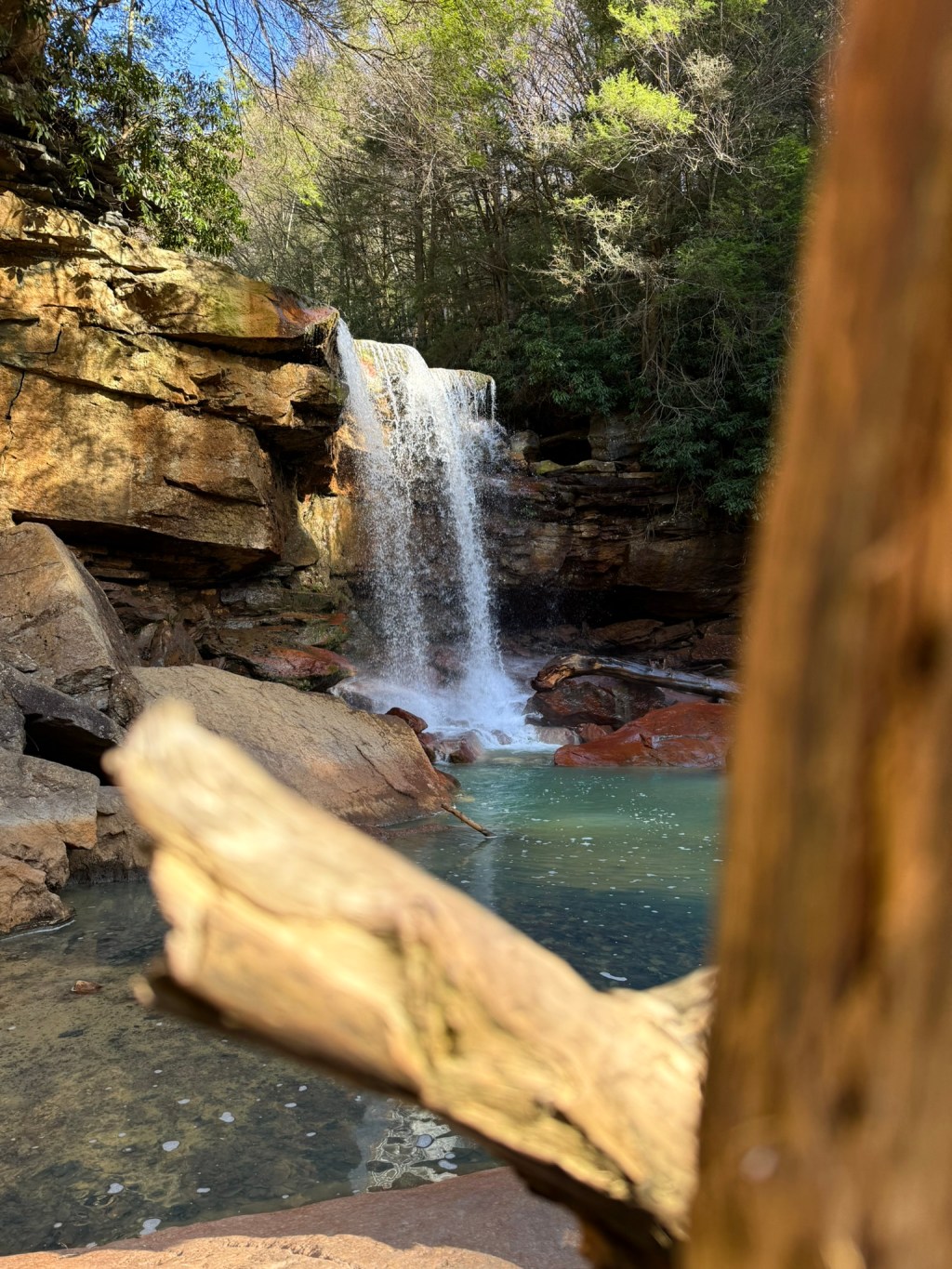
A trio of overlanders take in the sights and challenges of Monongahela National Forest
The Allegheny Discovery Route is an approximately 425-mile route spanning the George Washington National Forest and Monongahela National Forest. While the route primarily resides within West Virginia’s borders, adventurers will also have the opportunity to enjoy Maryland’s Green Ridge State Forest and even more of Monongahela’s beauty in Virginia as well. Depending on how often travelers stop to enjoy the natural, historical, and local offerings, they should plan for three to five days to complete the trail.
The Allegheny is a popular route for adventurers and overlanders of all skill levels. Many sections of the trail are accessible by almost any 4×4 vehicle (and in some sections, even that is not required), and travelers will be graced with the breathtaking views of the rolling Appalachian Mountains — “Monongahela” is, after all, the Delaware word for “endless mountains.” These views are even further enhanced by the color changes of the Autumn season, which is what compelled our particular excursion to explore an abridged section of the Allegheny Discovery Route this past Fall.
An opportunity to go off-grid presented itself with the Veteran’s Day weekend. A group of three of us managed to secure permission from our spouses to spend three days and two nights on the trail while they took on solo-parent duty — no small feat for mothers of children all collectively under the age of six. Given our time constraints, we elected to explore the Canaan Valley section of the Allegheny Discovery Route, consisting of the popular Canaan Valley Loop and Canyon Rim Road. We selected this section because of the anticipated challenge level of the trail (OnX Offroad designates Canaan Valley Loop to be a 3/10 difficulty), access to local supplies (this section resides in West Virginia’s Tucker County with two main towns for provisions), and the fact that one of the travelers (yours truly) had been to this section before. One of the group members hadn’t much real off-road experience, so a level of familiarity by the collective group would be a benefit to ensure the safety of each traveler.
Departure
The group departed from our homes in Southern Maryland at mid-day on Friday. Collectively, with the elevated holiday weekend traffic through Washington DC, we managed to get to the Monongahela area in about five and a half hours. This includes a mid-point lunch stop as well as a fuel-up and local wood collection stop (it is always a good practice to purchase or collect wood within 30 minutes of your intended campsite to avoid the spread of foreign bugs and pests to the area). Our convoy consisted of our very own Lobo, a 2020 Chevrolet Colorado ZR2 with a 3.6L V6 engine (sorry Diesel fans!), Betty, a 2014 Jeep Grand Cherokee Limited with upfitted A/T tires appropriate for this sort of adventure, and a yet-to-be-named Ford F-150 XLT outfitted with the FX4 package.
Pre-trip research had yielded a number of dispersed campsites (our preferred way to camp) and we ultimately settled in at a large site nestled up against the Glady Fork, a creek that stems from Dry Fork to the north, and ultimately, the Blackwater River. In the morning, we would be rewarded by the bright trickling sound of the creek, morning mist, and those beautiful Fall colors. We arrived with about an hour of daylight left, so we got to work making camp and making dinner. Myself and Betty’s driver would sleep in ground tents, while our friend in the F-150 had invested in an in-bed truck tent to elevate him off the ground.

Betty’s driver would be our esteemed camp chef for the evening and would be grilling a smorgasbord of steak, chicken, vegetables, and mushrooms on his newly acquired Blackstone camp griddle. There is nothing so simple and delicious as well-seasoned meat and veggies to warm one’s belly on an evening projected to drop to the lower thirties. While dinner was being prepared, a campfire was built using a Solo Stove Bonfire to warm the rest of our bodies on an evening projected to cool down to the thirties. We were also able to leverage our latest iPhones’ satellite communications functionality to connect with our spouses and let them know we’d arrived safely (an essential for travelers with families at home). We enjoyed our meals under the stars, lit only by our fire, and after getting caught up with each other’s lives (it’s amazing how the hustle of everyday life can prevent friends — even those that see each other weekly — from staying connected), we went to bed, lulled to sleep by the Glady Fork.

Saturday morning, we rose and quickly started with coffee and breakfast. For some of us, coffee is purely a caffeine delivery system, engrained into our morning rituals. For others, coffee is a pleasure; another small opportunity to hone a skill they enjoy. At any rate, this morning’s brew using an Aeropress XL system would satisfy us all. While one of us got a campfire started, our camp chef got back to his Blackstone to cook up some breakfast sandwiches; frying some sausage and eggs on one side of the iron, while perfectly toasting some english muffins on the other. The creek took on a seemingly new form in the morning. Its sounds were now accompanied by a cool mist, floating just above the ground. The birds were now joining in its song. This was an incredible campsite that’s we’d hate to leave.
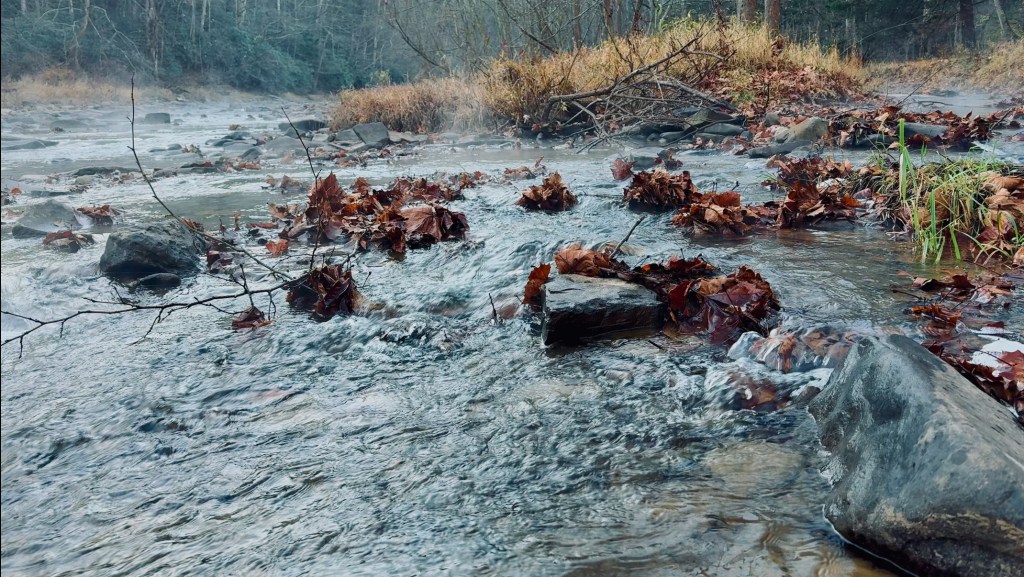
Following breakfast, we began to pack up camp and air down our tires. Given the projected difficulty of the trails we had planned, we started with a modest 15 to 18 psi.
We had planned an approximately 62-mile abridged loop of the Allegheny Discovery Trail that began with a crossing of the Dry Forks River, then commencing on Canyon Rim Road. After a quick detour of the town of Davis, we’d then explore Canaan Valley Loop and find camp for the night. Notably, this would be each driver’s first major water crossing.
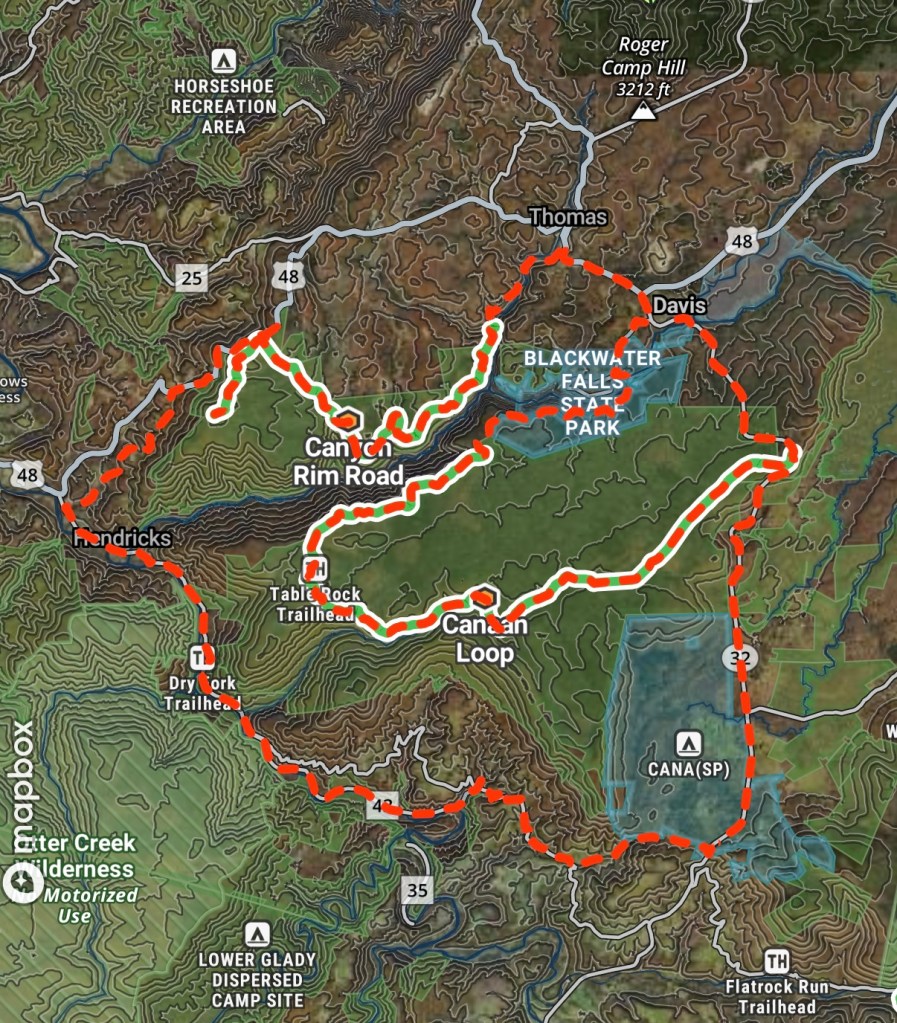
Canyon Rim Road
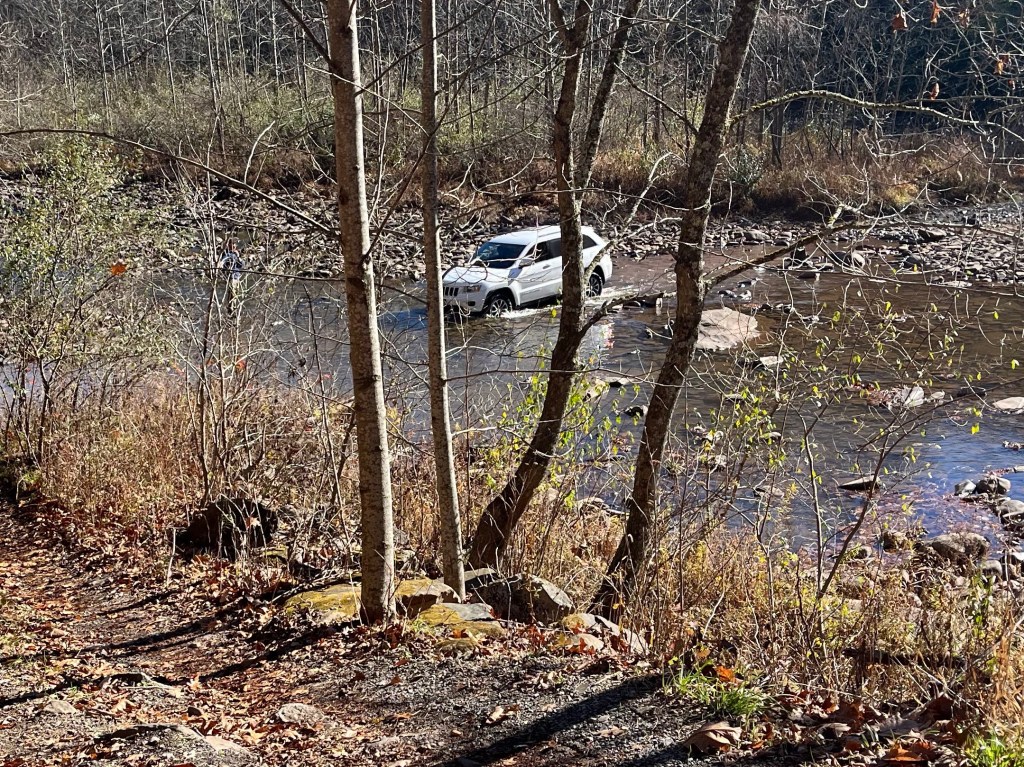
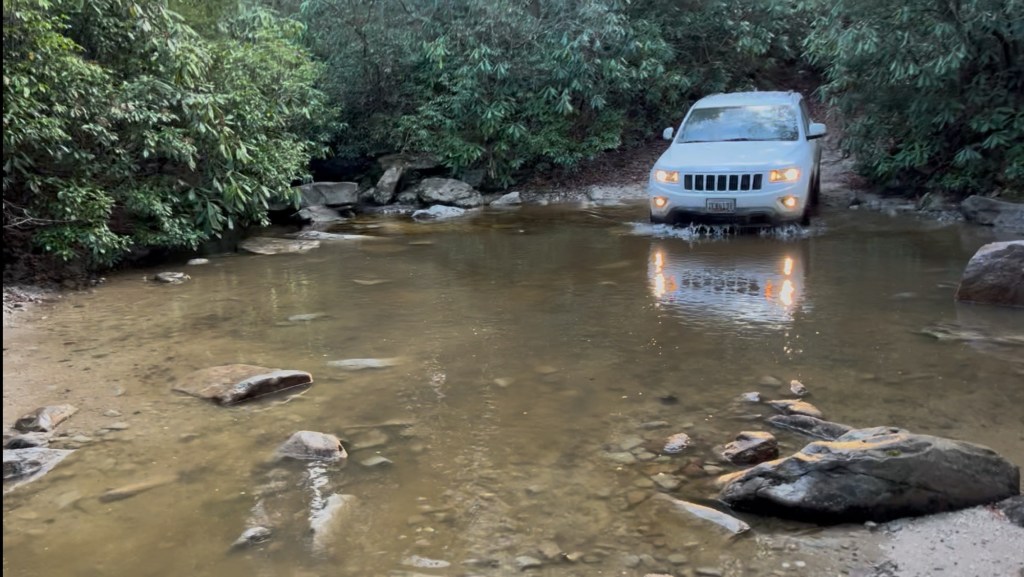
Water crossings, if done improperly, can be dangerous. Aside from the obvious drowning related incidents that can occur when driving a vehicle into rapidly moving water, the more common issues specific to overlanding relate to two failure modes: water ingestion into an engine, and electric failures. To avoid the former, drivers must have a clear understanding of the depth of the water, and the makeup of the ground beneath the water. One must only cross waters that are lower than a vehicle’s fording depth at its deepest point and avoid getting bogged down in mud or damaging their vehicle with large rocks. To avoid electric failures, one must make sure that any and all electric modifications are done properly and sealed against the elements. On forests like Monongahela, rain and seasonal changes can affect a river’s depth dramatically, so much so that Dry Forks can become impassable for a good portion of the year. Today, however, after a thorough investigation of the state of Dry Fork, we assessed that the water level was low enough and safely passable. The riverbed was drivable, with some boulders that could be avoided because they would be visible through the surface of the water. Lobo went first, with only one vehicle crossing the Dry Fork at a time. Should any of the group get stuck, the rest of the group would be equipped for a kinetic recovery. In hindsight, we were likely under-equipped for a water-related failure, but with the condition of the Dry Fork that day, we had determined the risk of such a failure to be low. With the guidance of the rest of the group over radio, Lobo was able to cross with little issue, and no short amount of pucker factor from an inaugural experience of this magnitude. Next was Betty, the lowest-sitting vehicle in the group. Again, with the rest of the group at the ready, Betty crossed with resounding success. Finally, our companion in the F-150 made the crossing, and despite being equipped with low-hanging side steps, had no issues crossing the Dry Fork.
Canyon Rim Road is mostly well-worn Forest Service roads; this trail was expected to be the easier of the two we would be exploring. But what this trail lacked in technical challenges, it made up for with breathtaking views of the forest, and of unique stops along the trail, such as the Olson Tower.
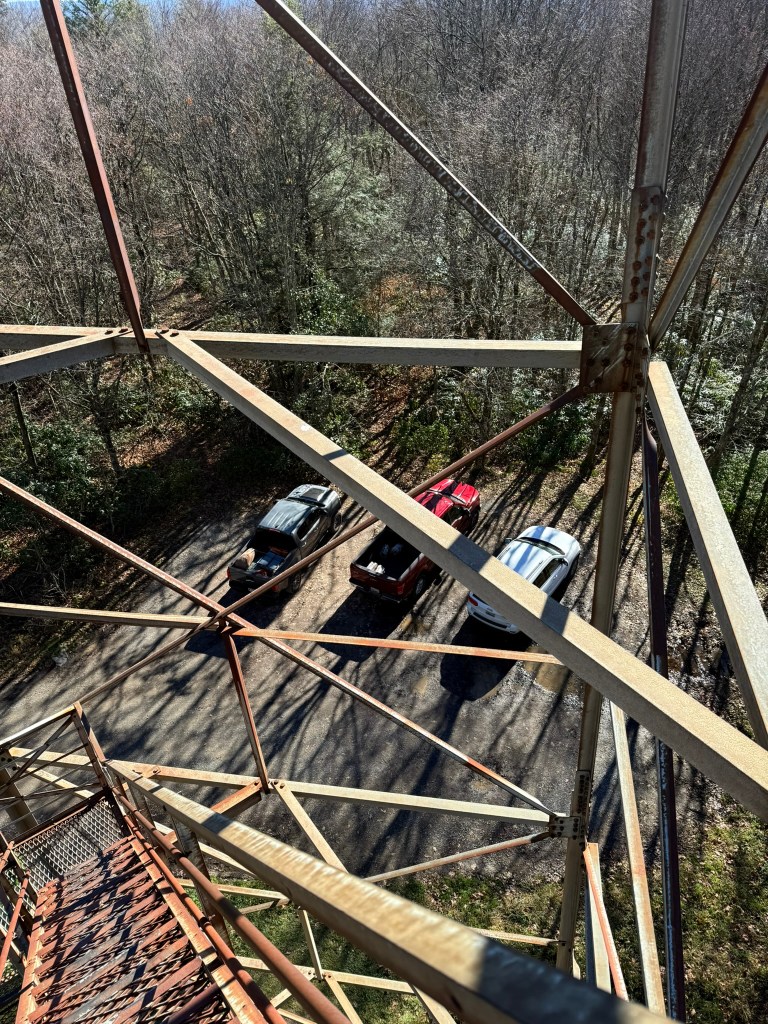
Just off of Forest Road 717, the Olson Observation Tower was the first fire tower in the state of West Virginia, built in 1922. It was later transferred to the Monongahela National Forest and was in active use until 1963, when it was replaced and renamed. To this day it remains open for travelers to visit, and — for those who dare — scale its 133 steps to the cabin top for some incredible photo opportunities. We stopped and began to work off breakfast.
Full disclosure, only two of the three travelers made it to the cabin. The first image below is as far as yours truly dared go before the creaks and winds implored me to come to my better senses. The other two gentlemen, however, had made it to the top to enjoy the view, albeit with much sorer legs than I had at the end of the evening.

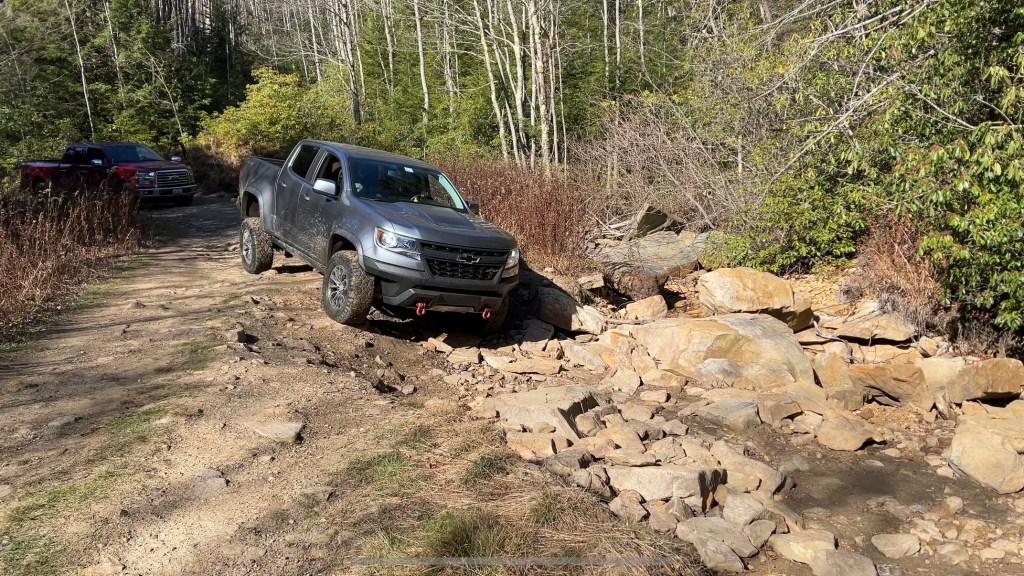
After we regrouped at the bottom of the tower, we mounted back up and returned to the trails. About three quarters of the way through Canyon Rim Road, we encountered its signature obstacle: a large washout that has deteriorated over the last two years. While it is generally accepted that its a much easier obstacle traveling from east to west, we had the fortune of traveling from the opposite direction. Nevertheless, we scouted the obstacle and developed our intended line. With Betty’s driver spotting over the comms, Lobo blazed the trail. The trick is to thread the exit correctly as there is large gutter on the left side of the exit that risks rolling unsuspecting vehicles, leaving little room on the right where the edge of the washout remains. However, if drivers take the correct line, this obstacle is achievable in low gear without locked differentials, even for our widest companion in the F-150. His side steps continued to take a beating, however.
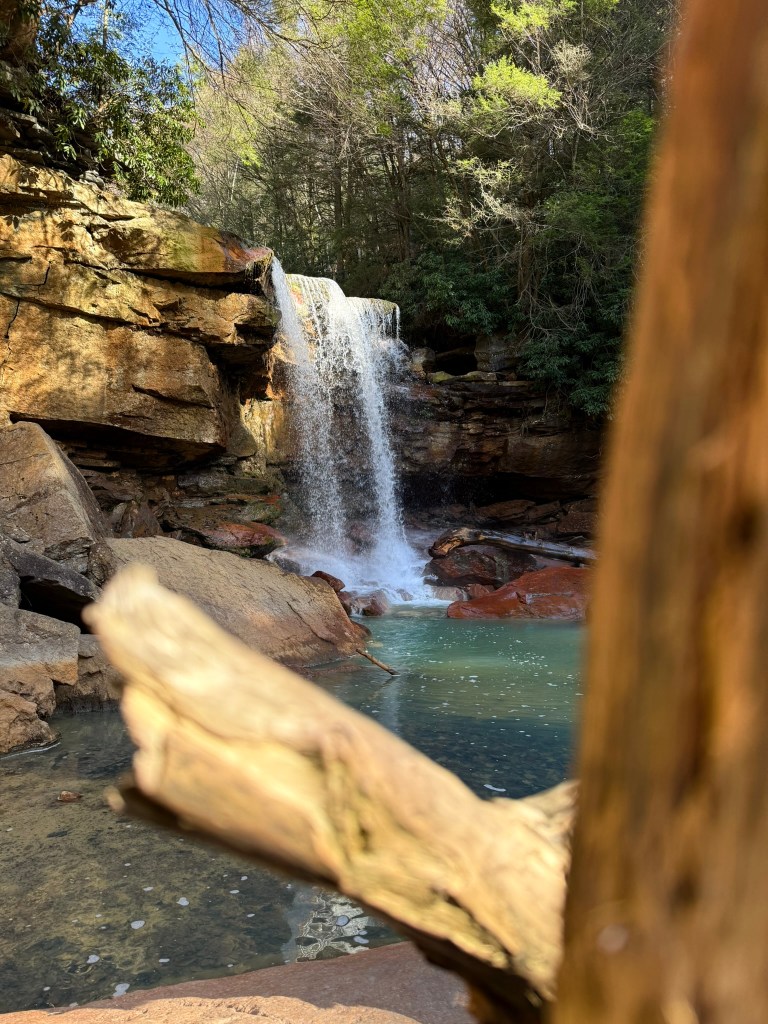
Following the washout, we made another detour to visit the Blackwater Falls, which turned out to be one of the highlights of the trail for us. We squeezed our rigs down a more challenging drop down to a designated parking lot — not knowing that a more serviceable road was just ahead — which would ultimately seal the fate of our friend in the F-150’s side steps. A short quarter mile hike down the road, we would be greeted by a roughly thirty-foot waterfall that was part of Monongahela’s Blackwater River, named for it’s dark and clear water throughout. Adventurers can hop the various boulders to stand over the river and even follow a rough pathway to get behind the falls! Our caravan took the photo opportunity, touched the frigid but refreshing waters, and made our way back on the trail.
The remainder of the trail was well-packed dirt road, and we cruised into Davis for lunch. While provisioned for lunch out of our vehicles, we opted to explore some of the local civilization for perhaps better put together fare.
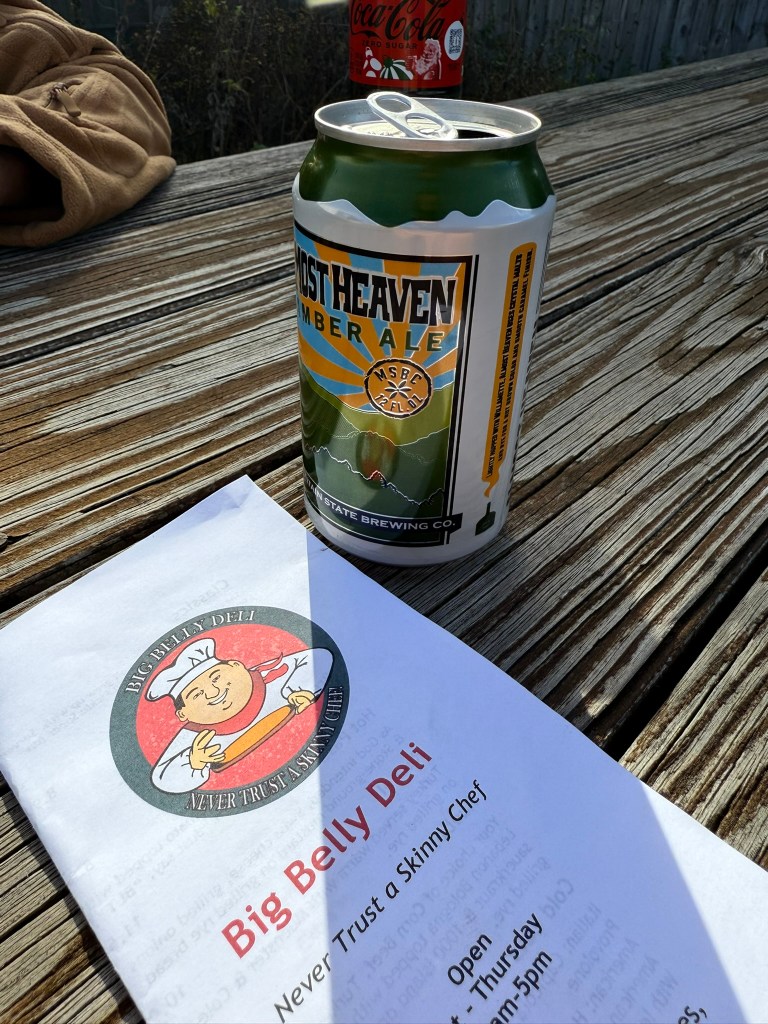
Davis is a small but well-organized town at the foot of the Monongahela mountains. It has built itself to be a natural entry point for outdoorspeople of all ages and types. Travelers can take advantage of cabins and lodges, stop in for a hot cup of coffee at the Trailhead Coffee Shop, or simply stop by for provisions at the local Shop ‘n Save. We opted for lunch at Big Belly Deli for some hot sandwiches and a brew from the local Mountain State Brewing Co, which originates in Thomas, WV less than three miles away! With our bodies fueled up, we loaded back into the trucks and set out for Canaan Valley Loop.
Canaan Valley Loop
For overlanders and off-road enthusiasts within range of George Washington National Forest, Canaan Valley Loop is a must; it offers the unique high-elevation forest scenery that is characteristic of the region, with a good balance of technical terrain that will challenge novice drivers while still being enjoyable to veterans. When traversing the loop as intended — counter-clockwise — it initially consists of more standard forest service roads. Here the challenge is to avoid speeding through it and missing more of the scenery and potential campsites. As we began the loop with approximately four hours of daylight left, and projecting to use most of it on this trail, we made a point to mark every campsite we saw on OnX Offroad to return to for the night. We would unfortunately not have time for one of the more scenic stops on the trail, Table Rock hiking trail, which overlooks the Blackwater Forest after a short 1.2-mile hike.
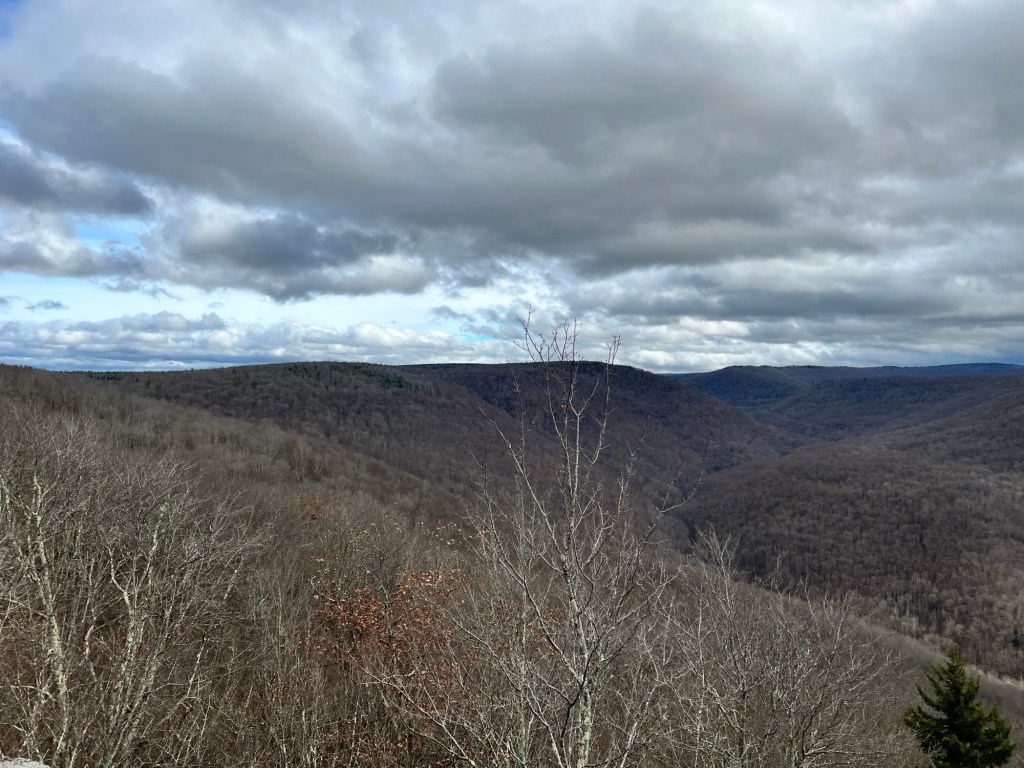
Turning northward at the apex of the trail, we would begin the more technical section of the trail. Marked early on as a tightening of overhead rhododendrons, the trail would begin to get rockier, with shelf steps and frequent obstacles approximately 1-2 feet in height. We’d also encounter more frequent but far less shallow water crossings (5 in total that day) with sandy floors where speed and momentum were more critical to success. While we expected 3/10 difficulty as reported by OnX, we assessed that the trail had degraded over the years such that it was more representative of a 4.
As the sun creeped toward the horizon, we found ourselves scrambling but crawling. We were eager to complete the trail and find a campsite, worried that the holiday travelers would take all of the best sites before we’d finished. On the other hand, too much speed would risk severe damage to our vehicles, creating an even bigger problem for us besides finding camp.
After what felt like an eternity, we’d made it back to the main road and we could begin to search for camp. As we’d feared, a number of the sites we’d identified along the earlier section of the Canaan were now occupied, but as we sped along the easier section for a second time, we found a suitable campsite buried in the woods, with plenty of overhead tree coverage.
We quickly made camp before dark and managed to begin making dinner right at nightfall. The night’s chef would be our friend in the F-150, who made an incredible chicken and dumpling stew. It was so good that one of us had burned our mouths because we couldn’t wait for the meal to cool down!
We opted to use the campsite fire ring instead of the Solo Stove for the night and built a roaring flame to enjoy the days conquests. As is usually the case, challenging moments on adventures are much more enjoyable in hindsight after given a chance to settle in, enjoy a cold beverage, and revel at the fact that “yeah, we actually did that!” We went to bed earlier that the previous night, overtaken by our exhaustion.
Return to Reality, & Reflections
We have a tradition for our last morning of a trip. After a few nights in the wild, we afford ourselves the luxury of a civilized meal for breakfast before heading home. Despite our stop at Big Belly Deli the previous afternoon, we opted to continue the tradition. After packing up camp and Leaving No Trace, we stopped back into Davis just a block down from Big Belly, to Milo’s Cafe and Restaurant.
If you can afford the late start, Milo’s opens at 8am on Sunday mornings, but the service and food is well worth it. The restaurant feels like a cozy, intimate diner, but dressed like a rustic log cabin consistent with the theme of the area. We opted for breakfast bagels and huevos rancheros, which hit home after two nights on the trail. While they offered mimosas, we opted for our requisite coffee fix this morning.
We paid our bill and made a quick stop at Trailhead Coffee to get a second caffeinated beverage for the drive home, fueled up at the local Marathon station, and made way for home.
Our drive home contained less comms banter and more introspection. Adventure by its very nature introduces us to the unexpected, and part of going on adventures requires us to come to terms with and embrace the unexpected to succeed. Whether it takes the form of a cautious inaugural river crossing or a trail that is more challenging than expected, we must embrace the transition from discomfort to pride in overcoming unplanned challenges to be able to critically think in unexpected situations. This mindset can help us on trails as well as in our daily lives. Challenges can come in all forms, and our ability to face those challenges with flexibility and calm will only serve us well. As our trio recalibrated our minds from washouts and rock shelves to joyfully rejoin our families to face chores and life admin, we were all grateful for the opportunity to spend even a few short nights in the Allegheny for some adventure and perspective. ⨶
 Roads Untraveled
Leave a comment